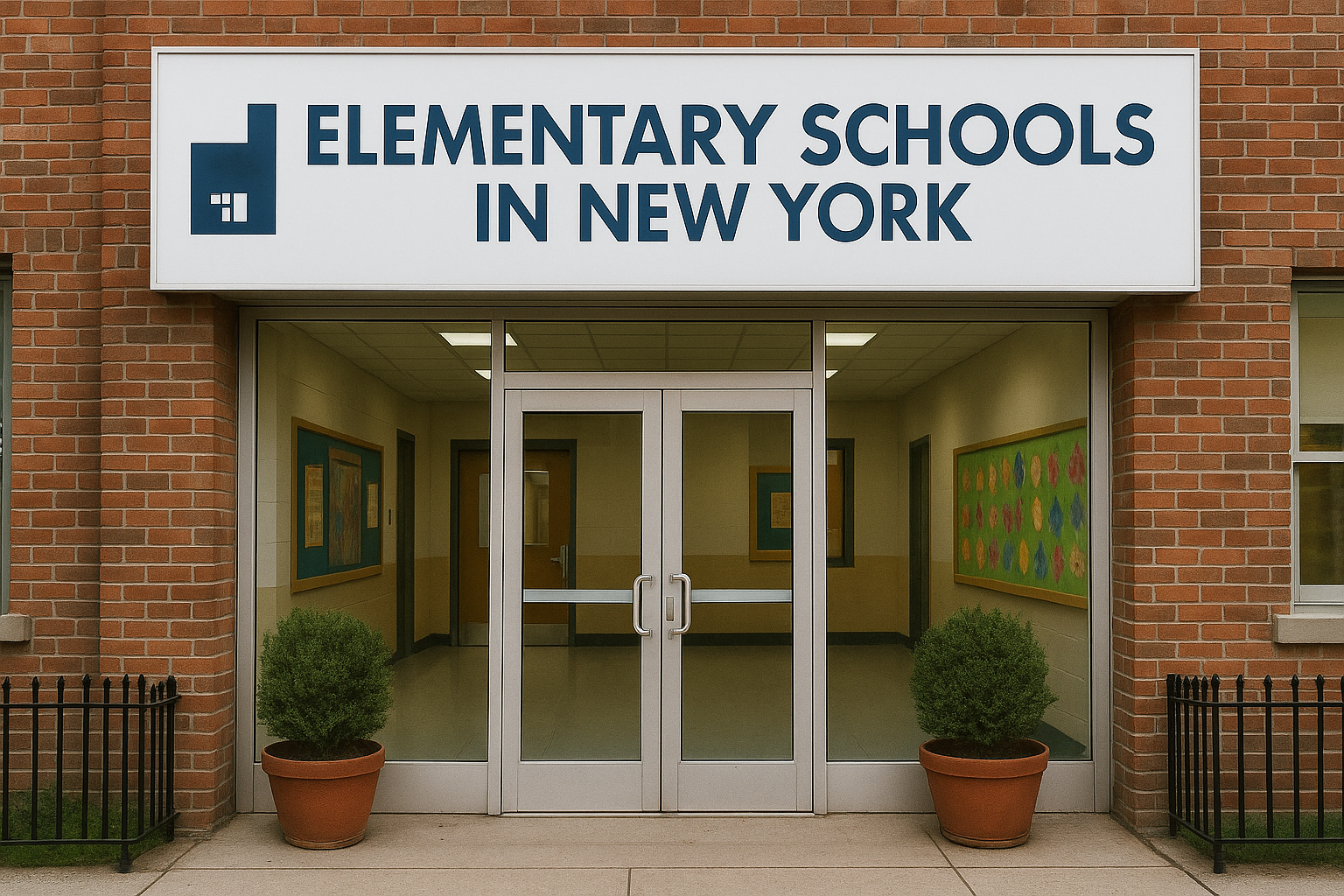
Elementary Schools in New York
New York is home to one of the most diverse and dynamic education systems in the United States. With millions of students enrolled across the state, New York City alone hosts more than a thousand public schools, complemented by prestigious private institutions and charter schools. Elementary education plays a critical role in shaping a child’s foundation, and New York offers parents a wide range of options.

Choosing the right elementary school is a big decision, as it sets the stage for academic achievement, social growth, and future opportunities. From highly competitive magnet schools to neighborhood public schools and private academies, New York’s education landscape has something for every family.
Understanding Elementary Education in New York
1. Structure of Elementary Schools
Most elementary schools in New York serve Kindergarten through Grade 5, although some extend to Pre-K or continue through Grade 6.
2. Public vs. Private Schools
- Public Elementary Schools: Operated under the New York City Department of Education (NYC DOE) or local districts outside the city, offering free education funded by taxpayers.
- Charter Schools: Independently run public schools that follow a unique curriculum while remaining tuition-free.
- Private Elementary Schools: Funded by tuition fees and private support, offering specialized programs, smaller class sizes, and enriched extracurriculars.
3. Specialized Programs
Many New York elementary schools offer:
- Gifted & Talented (G&T) Programs
- Dual-language instruction (Spanish, Mandarin, French, and more)
- STEM-focused learning
- Arts-integrated programs
- Inclusive education for children with special needs
Top 10 Elementary Schools in New York
Here’s a look at some of the most highly regarded elementary schools in New York, spanning both public and private sectors.
1. Success Academy Charter Schools (Multiple Locations in NYC)
Success Academy is one of the largest and most successful charter school networks in New York City. Known for its strong academic results, these schools focus on literacy, math, science, and critical thinking from the early grades.
- Type: Charter School
- Grades: K–5 (with middle and high school options later)
- Strengths: Rigorous curriculum, high test scores, free for families
2. Riverdale Country School (Bronx, NY)
Riverdale Country School is one of the most prestigious private schools in New York. Its lower school provides a nurturing environment that combines academics with arts, sports, and character development.
- Type: Private
- Grades: Pre-K–5
- Strengths: Emphasis on creativity, athletics, diversity, and small class sizes
3. P.S. 6 Lillie Devereaux Blake School (Manhattan, Upper East Side)
Located in one of the city’s most well-known neighborhoods, P.S. 6 is a highly competitive public school that has consistently ranked as one of the top elementary schools in New York City.
- Type: Public
- Grades: K–5
- Strengths: High academic performance, strong parent involvement, arts and enrichment programs
4. Horace Mann School (Bronx, NY)
One of the oldest and most prestigious private schools in the country, Horace Mann offers an outstanding elementary program that emphasizes academic rigor, character education, and extracurricular opportunities.
- Type: Private
- Grades: Nursery–Grade 5
- Strengths: Tradition of excellence, outstanding faculty, extensive campus facilities
5. Dalton School (Manhattan, Upper East Side)
Dalton is a private, independent school known for its progressive approach to education, which encourages independence, collaboration, and problem-solving from an early age.
- Type: Private
- Grades: K–12
- Strengths: Innovative curriculum, global perspectives, strong arts and sciences
6. Success Academy Harlem 1 (Manhattan, Harlem)
As part of the Success Academy network, Harlem 1 stands out for its commitment to underserved communities. Students consistently score among the highest in the state for math and reading.
- Type: Charter
- Grades: K–4
- Strengths: Strong focus on academics, leadership, and family engagement
7. Ethical Culture Fieldston School (Bronx, NY & Manhattan)
Founded on progressive education principles, Fieldston emphasizes social justice, ethics, and community engagement alongside traditional academics.
- Type: Private
- Grades: Pre-K–5
- Strengths: Progressive values, arts and music, experiential learning
8. Saint Ann’s School (Brooklyn, NY)
Located in Brooklyn Heights, Saint Ann’s is a private, independent school with a focus on arts, literature, and creativity. It’s particularly well-known for fostering individuality and intellectual curiosity.
- Type: Private
- Grades: K–5 (continuing to high school)
- Strengths: Creative curriculum, strong arts program, supportive environment
9. P.S. 321 William Penn School (Brooklyn, Park Slope)
One of the most sought-after public schools in Brooklyn, P.S. 321 is known for its high-quality teachers, community involvement, and diverse extracurricular activities.
- Type: Public
- Grades: Pre-K–5
- Strengths: Inclusive programs, strong PTA support, arts and literacy focus
10. Trinity School (Manhattan, Upper West Side)
Founded in 1709, Trinity is one of the oldest schools in the U.S. and remains one of the most prestigious. Its lower school provides a nurturing, academically rigorous education in small classes.
- Type: Private
- Grades: K–5
- Strengths: Rich history, academic excellence, values-based education
Key Features Parents Look for in New York Elementary Schools
- Academic Excellence: Schools with a proven track record of strong student outcomes.
- Diversity & Inclusion: Many parents value multicultural and bilingual environments.
- Extracurricular Activities: Arts, sports, and enrichment programs that complement academics.
- Safe Learning Environment: Student well-being, safety, and supportive teachers.
- Proximity & Accessibility: For busy families, location often plays a big role.
Public vs. Private Elementary Schools in New York
- Public Schools: Free, diverse, and often neighborhood-based. Admission depends on zoning, but magnet and gifted schools require testing or lottery placement.
- Private Schools: Offer smaller classes, extensive extracurriculars, and specialized facilities but come with high tuition costs.
- Charter Schools: Free, selective through lotteries, with unique curricula designed to improve student outcomes.
Benefits of Elementary Education in New York
- Access to world-class cultural institutions (museums, theaters, libraries).
- Exposure to diversity and multicultural learning environments.
- Opportunities to participate in specialized academic or artistic programs.
- Strong pathways from elementary school to prestigious middle and high schools.
Conclusion
Elementary schools in New York set the standard for quality education in the U.S. With a wide range of options—public, private, and charter—families can find a school that matches their child’s learning style, interests, and goals. From historic institutions like Trinity School to innovative charter schools like Success Academy, the choices are vast and varied.
Ultimately, the best school is the one where your child feels supported, challenged, and inspired to grow. As New York continues to evolve as a hub of diversity and innovation, its elementary schools remain at the forefront of shaping the leaders of tomorrow.
FAQs
Children in New York typically begin elementary school at age 5 when they enter Kindergarten.
Most elementary schools in New York run from Kindergarten through Grade 5, though some schools extend to Grade 6.
Yes, public elementary schools are funded by taxpayers and free for all residents. However, private schools charge tuition, and charter schools are free but require a lottery for admission.
Some of the top elementary schools in New York include P.S. 6 Lillie Devereaux Blake School, Riverdale Country School, Dalton School, Horace Mann, Trinity School, and Success Academy Charter Schools.
Enrollment is usually based on your residential address within a school zone. Families can also apply for gifted & talented programs, magnet schools, or charter schools via a lottery system.
Yes, many schools offer dual-language programs in Spanish, Mandarin, French, and other languages to support bilingual learning.
Both are tuition-free, but charter schools operate independently with their own teaching methods and curriculum, while public schools are run by the NYC Department of Education.
Private schools often provide smaller class sizes, advanced facilities, and specialized programs, but tuition can be very high. Families should weigh cost, location, and child’s needs before deciding.
Yes, both public and private schools in New York provide special education services, including Individualized Education Programs (IEPs) and inclusive learning environments.
Parents often consider academic performance, location, diversity, extracurricular opportunities, and school culture when selecting a school. Visiting schools and talking to other parents can also help.
