
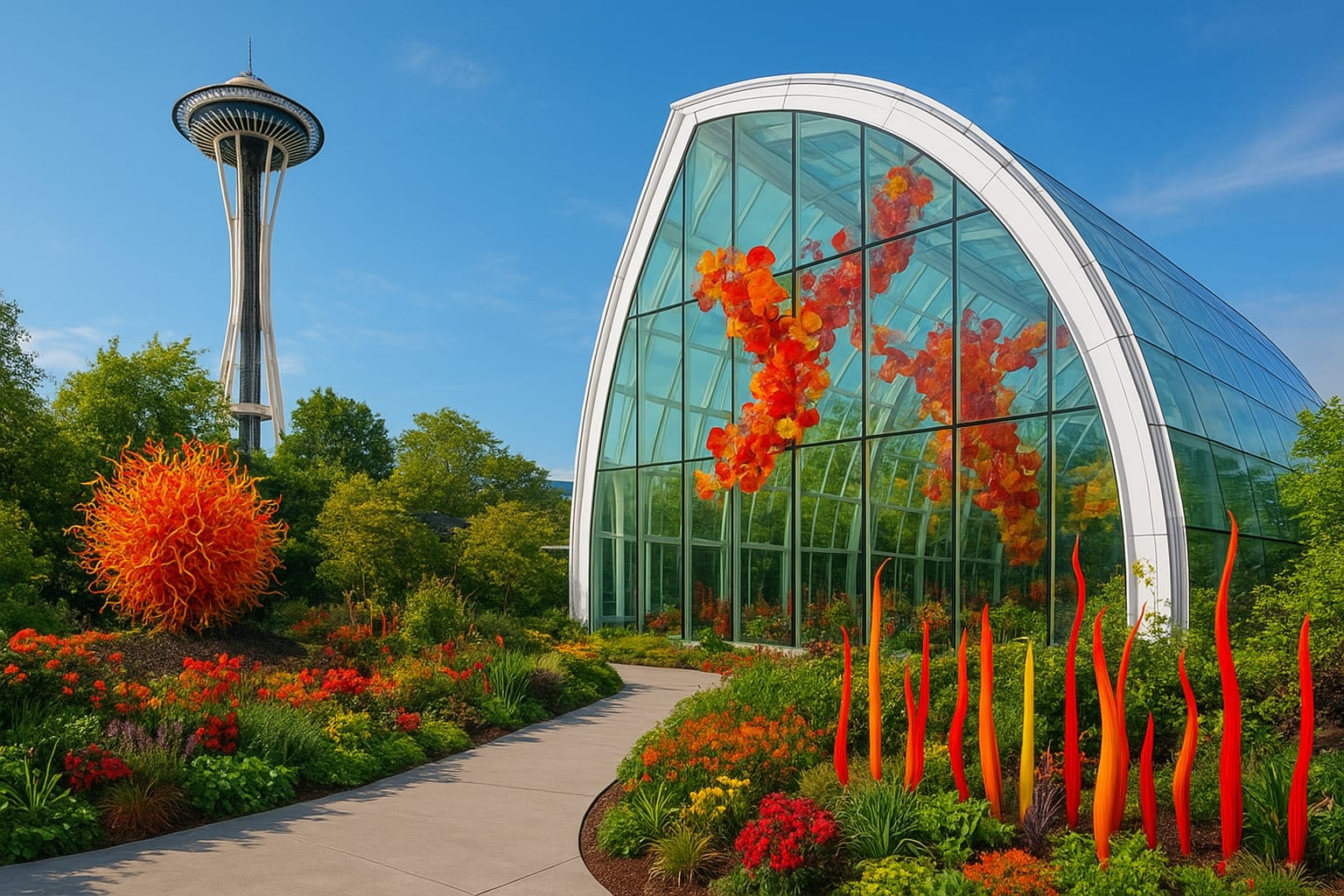
Chihuly Garden and Glass Museum Seattle
Seattle is a city where creativity thrives. From music and technology to coffee culture and outdoor adventures, it offers a mix of innovation and artistry. Among its many cultural gems, the Chihuly Garden and Glass Museum shines as one of the most captivating. Located at the base of the Space Needle in the Seattle Center, this museum is not just a showcase of art — it’s an immersive journey into the imagination of one of the world’s most innovative glass artists, Dale Chihuly.

For visitors, the museum is more than a gallery. It’s an exploration of light, color, texture, and form that sparks wonder and inspiration. This blog will take you through the story, exhibits, and experiences of the Chihuly Garden and Glass, while also providing tips to make your visit unforgettable.
Who is Dale Chihuly?
To appreciate the museum, it’s essential to know its visionary creator. Dale Chihuly, born in 1941 in Tacoma, Washington, revolutionized the art of glassblowing. Unlike traditional glassmakers who worked on a small scale, Chihuly expanded the medium into massive installations, chandeliers, and immersive environments.
His career began with studies at the University of Washington and later at the Rhode Island School of Design, where he honed his craft. Chihuly’s artistic approach was not limited by technical boundaries; he pushed glass beyond functional objects into bold, abstract, and often monumental works of art. His sculptures appear in museums, hotels, and public spaces worldwide, but the Chihuly Garden and Glass in Seattle remains the most comprehensive display of his life’s work.
The Museum’s Origins
The Chihuly Garden and Glass opened in 2012 as part of Seattle Center. The goal was to create a permanent space where visitors could immerse themselves in Chihuly’s vision. Since then, it has become one of Seattle’s most popular attractions, drawing locals, tourists, and art lovers alike.
What makes the museum unique is its integration of indoor galleries, a breathtaking glasshouse, and an outdoor garden. Each element is carefully designed to blend glass art with architecture, nature, and light — resulting in a dynamic experience that changes throughout the day and seasons.
Exploring the Museum
The Chihuly Garden and Glass is divided into three main areas: the Galleries, the Glasshouse, and the Garden. Together, they form a flowing narrative that guides visitors from intimate art pieces to monumental installations.
1. The Galleries
The galleries are the heart of the museum, featuring a series of rooms, each dedicated to a specific theme or collection from Chihuly’s career. Walking through them feels like stepping into different chapters of his artistic journey.
- The Glass Forest: A dramatic, darkened room where glowing neon and glass tubes create a forest-like landscape. It’s an otherworldly introduction to the power of glass as both fragile and bold.
- The Northwest Room: This gallery reflects Chihuly’s Pacific Northwest roots, with works inspired by Native American basket weaving and textiles. The delicate glass baskets mimic the softness of fabric while maintaining the fragility of glass.
- The Sealife Room: A room filled with sea-inspired sculptures — starfish, shells, octopuses, and waves. It pays homage to the ocean that has influenced much of Chihuly’s work.
- The Persian Ceiling: One of the most talked-about installations, this gallery features a glass ceiling layered with hundreds of colorful glass pieces. Visitors walk beneath it, bathed in a kaleidoscope of colors as light filters through.
- The Chandeliers and Towers: These massive installations are among Chihuly’s signatures. Brightly colored glass spirals and twists into monumental forms that dominate entire spaces.
Each gallery is lit strategically to highlight the reflective and translucent qualities of glass, creating an immersive sensory experience.
2. The Glasshouse
The centerpiece of the museum is the Glasshouse, a 40-foot-tall glass and steel structure that feels like a cathedral of art and light. Suspended inside is a spectacular 100-foot-long sculpture made up of fiery red, orange, and yellow glass elements.
The Glasshouse installation is not static; it interacts with its surroundings. During the day, sunlight streams through the glass walls, illuminating the sculpture in different ways depending on the weather and time. At night, the piece glows dramatically under artificial lighting.
The transparent design of the Glasshouse also frames views of the Space Needle, creating a stunning juxtaposition between art and architecture. For many visitors, this is the highlight of the museum — a place where creativity, scale, and setting come together in harmony.
3. The Garden
Stepping outside into the Garden, visitors are greeted with a fusion of glass and nature. Vibrant glass sculptures shaped like plants, flowers, and organic forms are scattered among real trees, shrubs, and flowers.
The contrast is breathtaking. Bright reds, blues, and yellows of glass blooms stand out against green foliage, while reflective surfaces create ever-changing perspectives as the seasons change. In spring, tulips and cherry blossoms complement the glass forms; in autumn, fiery leaves mirror the glass’s warm tones.
The Garden perfectly encapsulates Chihuly’s vision of integrating art with the natural world.
Why Visit Chihuly Garden and Glass?
There are countless reasons why the museum is a must-see:
- Unparalleled Artistry: It’s the most comprehensive display of Chihuly’s career, from small-scale works to monumental installations.
- Immersive Atmosphere: Unlike traditional museums where art feels distant, here you step inside environments designed to surround you with color and form.
- Iconic Location: Situated in Seattle Center, it’s next to other landmarks like the Space Needle, Museum of Pop Culture, and Pacific Science Center.
- Perfect for All Ages: The museum captivates both adults and children, making it a great family destination.
- Photography Heaven: Every corner is a photo opportunity, with vivid colors, dramatic lighting, and unique perspectives.
Events and Special Experiences
Beyond its exhibitions, Chihuly Garden and Glass also hosts events, workshops, and lectures that allow visitors to engage more deeply with glass art. Seasonal events, live music, and evening programs create new ways to experience the museum.
For those interested in culinary experiences, the Collections Café (when open) offers meals inspired by Chihuly’s art, surrounded by personal collections of quirky objects curated by the artist himself.
Tips for Visiting
- Buy Tickets in Advance: The museum is one of Seattle’s busiest attractions. Booking online saves time.
- Bundle with the Space Needle: Many visitors choose a combo pass to enjoy both attractions, located side by side.
- Visit Twice in a Day: If time allows, go once in daylight and again after dark. The artworks transform dramatically with changing light.
- Take Your Time: Though not enormous, the museum is rich in detail. Allow at least 1.5 to 2 hours.
- Photography Rules: Photography is encouraged, but tripods and selfie sticks may be restricted.
The Impact of Chihuly’s Work
The Chihuly Garden and Glass Museum does more than showcase one artist’s genius — it represents the evolution of glass from functional craft to fine art. Chihuly’s work has challenged perceptions, proving that glass can be monumental, expressive, and deeply emotional.
His installations evoke wonder, curiosity, and even reflection. For many, they’re not just objects but experiences — an interplay of light, form, and imagination that resonates long after the visit.
Beyond the Museum
Visiting the Chihuly Garden and Glass is part of the larger Seattle Center experience. After exploring the museum, visitors can enjoy:
- A ride to the top of the Space Needle
- Hands-on exhibits at the Pacific Science Center
- Interactive displays at the Museum of Pop Culture (MoPOP)
- Open-air performances and cultural festivals at the Seattle Center grounds
This makes the area perfect for a full day of exploration.
Seasonal Charm
The museum feels different depending on the season:
- Summer: Bright light enhances the vibrancy of the glass, and the garden is in full bloom.
- Autumn: Golden leaves in the garden mirror the fiery glass tones, creating harmony between art and nature.
- Winter: The glass glows beautifully under overcast skies, and holiday lights around Seattle Center add festive charm.
- Spring: Blossoms in the garden complement the colorful installations, making it one of the best times for photography.
Accessibility and Visitor Information
- Location: Seattle Center, near the Space Needle.
- Accessibility: The museum is fully wheelchair accessible.
- Amenities: Restrooms, gift shop, dining options, and coat check are available.
- Guided Tours: For deeper insights, join a guided tour or use the audio guide.
Final Thoughts
The Chihuly Garden and Glass Museum is not just a place to look at art — it’s a place to feel art. It celebrates human creativity, imagination, and the extraordinary possibilities of glass as a medium.
Whether you’re an art lover, a traveler, or someone looking for a memorable Seattle experience, this museum will leave you inspired. With its dazzling galleries, awe-inspiring Glasshouse, and enchanting Garden, it stands as a testament to the power of vision and the beauty of merging art with environment.
Visiting the museum is not just an outing; it’s a journey into color, light, and wonder. And for many, it becomes one of the most unforgettable highlights of Seattle.
Check out Best Indian Restaurants
FAQs
The museum is located at the Seattle Center, right next to the iconic Space Needle in downtown Seattle, Washington.
Dale Chihuly is a world-renowned glass artist from Tacoma, Washington. He revolutionized glassblowing by creating large-scale, colorful installations that transformed glass into fine art.
Most visitors spend about 1.5 to 2 hours exploring the galleries, Glasshouse, and Garden. Art enthusiasts and photographers may want to spend longer.
Daytime: Natural light highlights the vibrant colors of the glass, especially in the Glasshouse.
Evening: Dramatic lighting transforms the sculptures, creating a completely different atmosphere.
For the best experience, many recommend visiting once during the day and once after dark.
Yes, photography is encouraged throughout the museum. However, tripods, selfie sticks, and drones are not permitted.
Yes. Children often find the colorful and whimsical installations fascinating. Families are welcome, though supervision is recommended to ensure the delicate works remain protected.
Yes. The Collections Café (when open) offers meals inspired by Chihuly’s art and personal collections. In addition, many restaurants and food stalls are nearby within the Seattle Center.
Yes, but tickets often sell out, especially during weekends and holidays. Purchasing tickets online in advance is recommended.
Absolutely. The entire museum, including the galleries, Glasshouse, and Garden, is fully wheelchair accessible.
Yes. Many visitors purchase combo tickets for both attractions since they are located side by side at Seattle Center.
