
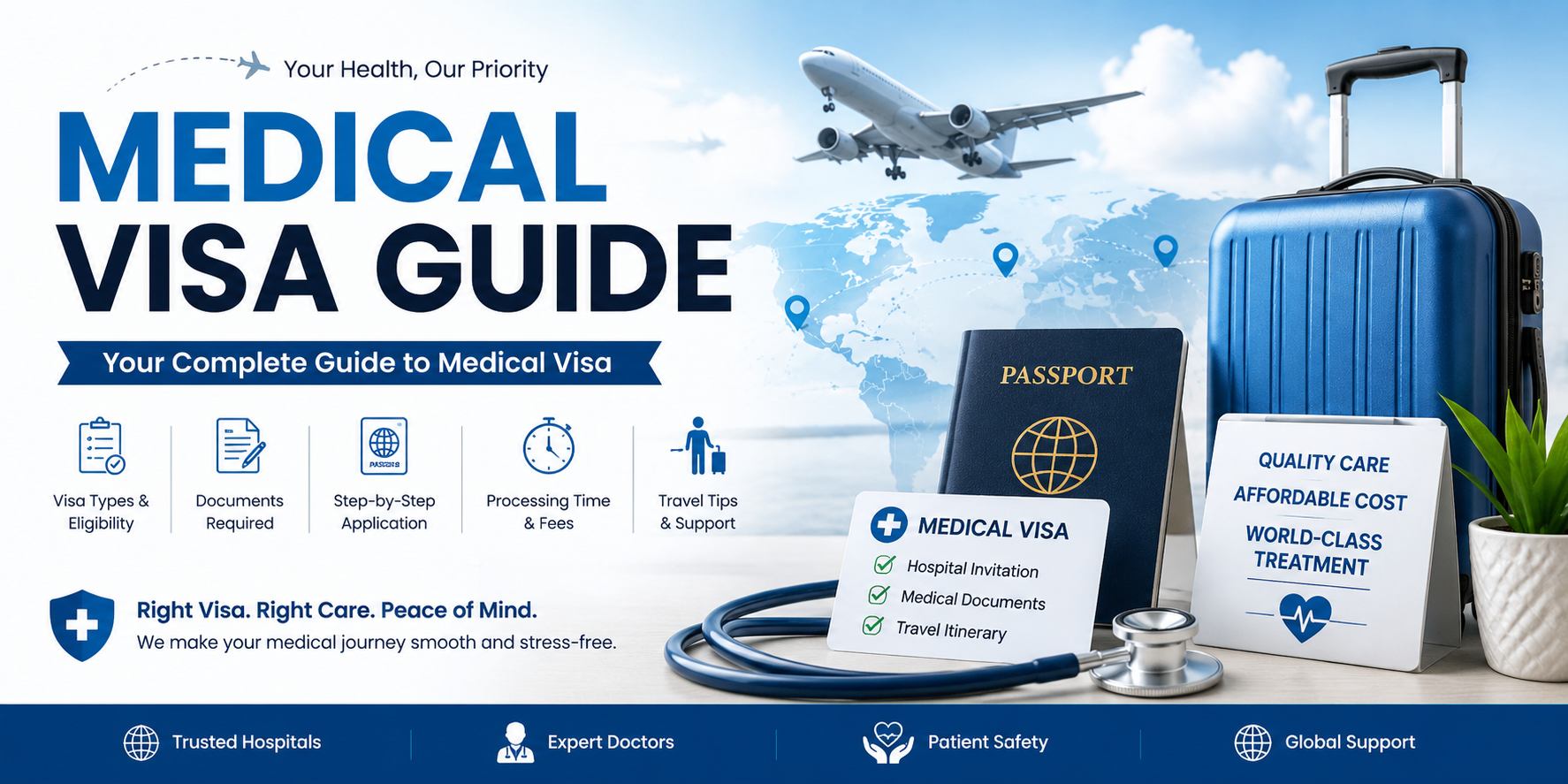
Medical Visa Guide
Traveling abroad for medical treatment has become increasingly common over the last decade. Every year, millions of patients leave their home countries to receive specialized healthcare, affordable surgeries, advanced technology, or shorter waiting times. Before making the journey, however, obtaining the correct medical visa is one of the most important steps.
A medical visa allows patients to legally enter another country specifically for medical diagnosis, treatment, surgery, rehabilitation, or specialized healthcare services. Understanding the application process can save time, reduce stress, and help ensure a smooth medical journey.
This comprehensive guide explains everything you need to know about medical visas, including eligibility, required documents, application procedures, common mistakes, and practical travel tips.
What Is a Medical Visa?
A medical visa is a special type of travel authorization issued to foreign nationals who need to visit another country for medical treatment.
Unlike tourist visas, medical visas are specifically designed for patients seeking healthcare services at recognized hospitals or healthcare facilities.
Medical visas are commonly issued for:
- Heart surgery
- Cancer treatment
- Organ transplantation
- Orthopedic surgery
- Cosmetic procedures
- Dental treatments
- Fertility treatment (IVF)
- Neurological treatment
- Eye surgery
- Rehabilitation programs
Some countries also allow one or two attendants or family members to accompany the patient on separate medical attendant visas.
Why Do People Apply for Medical Visas?
There are many reasons patients choose overseas healthcare.
Affordable Treatment
Many countries provide world-class healthcare at significantly lower costs compared to developed nations.
Advanced Medical Technology
Leading hospitals often offer innovative treatment options and modern equipment that may not be available elsewhere.
Reduced Waiting Time
Patients can receive surgeries and specialist consultations much faster than in countries with long healthcare waiting lists.
Highly Experienced Specialists
Many internationally accredited hospitals employ surgeons and physicians with global training and decades of experience.
Benefits of a Medical Visa
A medical visa offers several advantages beyond simple travel permission.
Access to Specialized Healthcare
Patients can legally receive treatment at approved healthcare institutions.
Longer Stay
Medical visas often allow longer stays than regular tourist visas, depending on the treatment duration.
Multiple Entry Options
Some countries issue multiple-entry medical visas, allowing patients to return for follow-up care.
Family Support
Certain countries permit attendants or caregivers to accompany patients during treatment.
Who Can Apply for a Medical Visa?
Generally, anyone requiring medical treatment abroad may be eligible, provided they meet the country’s immigration requirements.
Applicants usually include:
- Patients requiring surgery
- Individuals seeking specialized diagnosis
- Cancer patients
- Cardiac patients
- Orthopedic patients
- Organ transplant recipients
- Fertility treatment patients
- Children requiring specialized healthcare
Documents Required for a Medical Visa
Although requirements differ between countries, most applications require the following:
- Valid passport
- Completed visa application form
- Recent passport-sized photographs
- Invitation or appointment letter from the hospital
- Medical diagnosis from the home country
- Doctor’s referral (if applicable)
- Proof of financial support
- Travel itinerary
- Accommodation details
- Return flight reservation (where required)
- Health insurance (if applicable)
Always verify the latest requirements with the embassy or consulate of your destination country.
Step-by-Step Medical Visa Application Process
Step 1: Choose a Hospital
Select a reputable hospital specializing in your required treatment.
Check:
- International accreditation
- Doctor qualifications
- Patient reviews
- Success rates
- Cost estimates
Step 2: Obtain Medical Documents
Request:
- Medical reports
- Diagnostic scans
- Laboratory results
- Prescription history
- Referral letters
These documents help the destination hospital evaluate your case.
Step 3: Receive Hospital Invitation
Most hospitals issue an official invitation letter after reviewing your medical records.
The letter generally includes:
- Patient information
- Proposed treatment
- Estimated duration
- Cost estimate
- Doctor details
Step 4: Submit Visa Application
Apply online or through the embassy, depending on the country’s visa system.
Upload all required documents carefully.
Step 5: Attend Interview (If Required)
Some embassies request an interview to verify:
- Purpose of travel
- Financial capability
- Treatment details
- Return plans
Answer honestly and provide supporting documents.
Step 6: Wait for Processing
Processing time varies depending on the country.
Emergency medical cases may receive priority processing.
Medical Visa Processing Time
Typical processing times include:
| Country | Estimated Processing |
|---|---|
| India | 2–7 working days |
| Thailand | 3–10 days |
| Turkey | 5–15 days |
| Malaysia | 5–10 days |
| Singapore | 5–7 days |
| UAE | 3–7 days |
| Germany | 2–6 weeks |
| United Kingdom | Around 3 weeks |
| United States | Varies based on appointment availability |
Always apply well in advance of your planned treatment.
Common Reasons for Medical Visa Rejection
Applications may be refused because of:
- Incomplete documents
- Invalid passport
- Lack of financial proof
- Insufficient medical documentation
- Incorrect application details
- Security concerns
- Immigration violations
- Failure to explain treatment purpose
Carefully review your application before submission.
Can Family Members Travel With the Patient?
Yes.
Many countries issue separate visas for:
- Spouse
- Parent
- Child
- Caregiver
- Medical attendant
These visas usually require proof of relationship and the patient’s treatment schedule.
Important Travel Tips
Before traveling:
- Keep printed copies of all medical documents.
- Carry prescribed medicines in original packaging.
- Purchase travel insurance if recommended.
- Confirm your hospital appointment.
- Arrange airport transportation.
- Save emergency contact numbers.
- Learn basic local emergency procedures.
- Keep digital copies of passports and visas.
Preparation helps reduce stress during international travel.
Medical Visa vs Tourist Visa
| Medical Visa | Tourist Visa |
|---|---|
| Medical treatment purpose | Tourism and leisure |
| Hospital invitation required | Usually not required |
| Longer stay possible | Limited duration |
| Follow-up treatment allowed | Medical treatment may be restricted |
| Medical documentation required | No medical documents needed |
Using the correct visa category helps avoid immigration issues.
Popular Countries for Medical Tourism
Several countries have become leading destinations for international patients.
India
Known for affordable healthcare, highly qualified specialists, and advanced hospitals.
Popular treatments:
- Cardiac surgery
- Cancer care
- Organ transplant
- Orthopedics
- IVF
Thailand
Well known for:
- Cosmetic surgery
- Dental treatment
- Wellness programs
Turkey
Popular for:
- Hair transplant
- Cosmetic procedures
- Dental tourism
Singapore
Recognized for:
- Advanced technology
- Cancer treatment
- Pediatric care
Malaysia
Offers affordable treatment combined with modern healthcare facilities.
Tips for a Successful Medical Journey
Choose internationally accredited hospitals.
Understand the complete treatment cost before departure.
Communicate openly with your healthcare provider.
Maintain copies of all medical records.
Follow post-treatment instructions carefully.
Schedule follow-up consultations before returning home.
Final Thoughts
Obtaining a medical visa is one of the most important steps in planning treatment abroad. While each country has its own immigration rules, careful preparation, accurate documentation, and choosing a reputable hospital can make the process much smoother.
Before applying, research the destination’s visa policies, consult your healthcare provider, and keep all medical records organized. A well-prepared application not only increases the chances of approval but also helps you focus on what matters most—receiving quality medical care and beginning your recovery with confidence.
Frequently Asked Questions (FAQs)
Yes. A medical visa is specifically issued for healthcare purposes and often requires hospital documentation.
Validity depends on the destination country and the expected treatment duration.
Many countries allow extensions if additional treatment is medically necessary and supported by the treating hospital.
Yes. Many countries issue medical attendant visas for close family members or caregivers.
Requirements vary by country, but travel insurance is often recommended and may be mandatory in some destinations.
